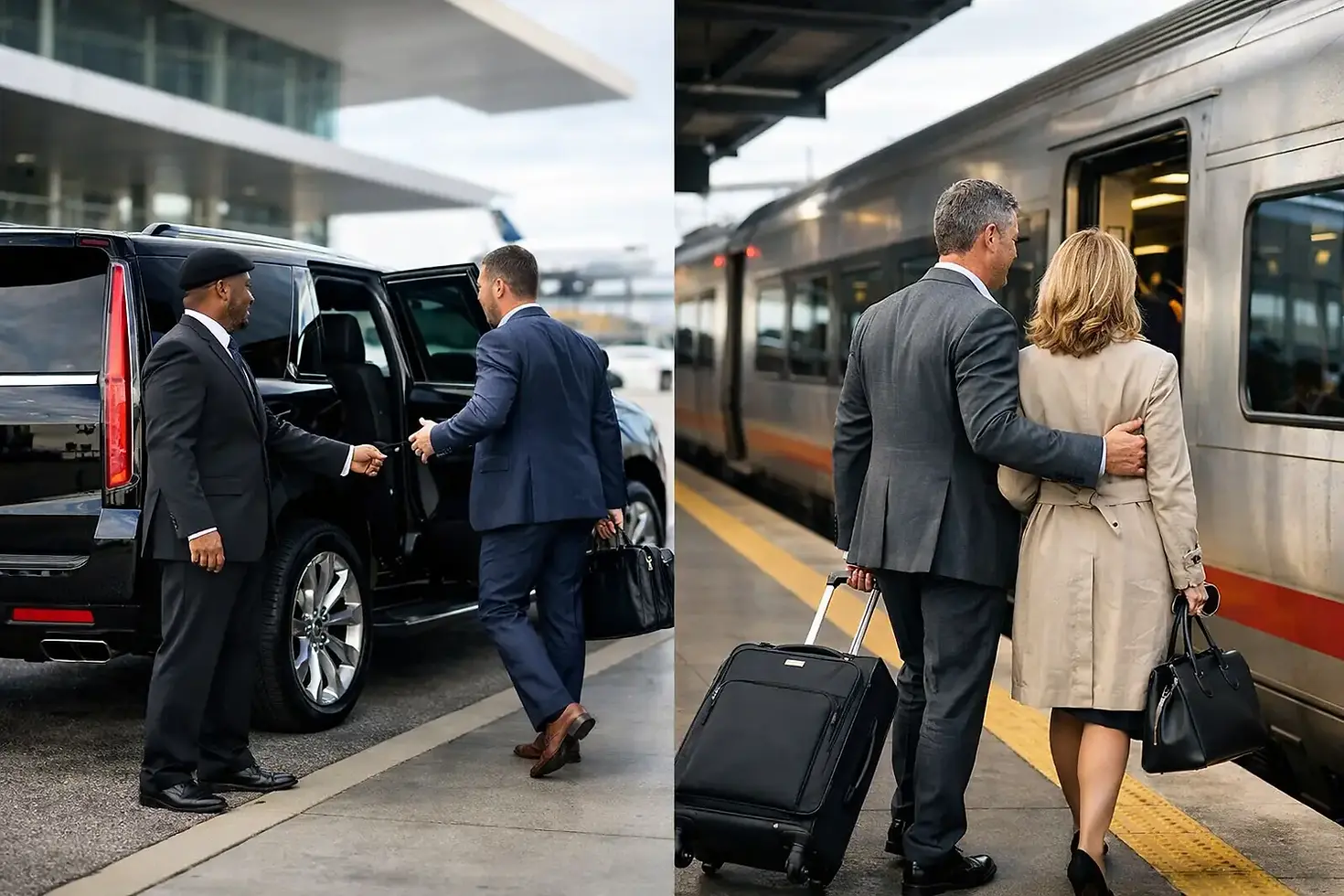
JFK Transfer Versus Train: Which Wins?
Missing a flight to save a little on ground transportation is rarely a smart trade. When travelers compare JFK transfer versus train, the real question is not simply cost. It is whether you want your airport trip to be predictable, comfortable, and aligned with the value of your time.
For many travelers in Northern New Jersey and Rockland County, JFK is not a quick hop. It is a cross-region airport run that can involve multiple highways, tunnel or bridge traffic, train changes, station transfers, luggage handling, and a fair amount of uncertainty. That is where the difference between public transit and a professional airport transfer becomes very clear.
JFK transfer versus train: what are you really comparing?
On paper, the train can look efficient. There is a fixed fare, no concern about highway congestion in the same way, and New York rail infrastructure gives the impression of structure. If you are traveling solo from Manhattan with a backpack and flexible timing, train service to JFK can be a reasonable option.
But that is not how many luxury-oriented or business travelers in places like Ridgewood, Ramsey, Montville, Wyckoff, or Nyack actually travel. They are often leaving from home, heading to an airport at a specific hour, carrying more than one bag, and working within a schedule that does not tolerate missed connections. In those cases, you are not comparing one direct option to another. You are usually comparing true door-to-door service with a chain of separate transit steps.
A private JFK transfer starts at your curb and ends at your terminal. A train trip often starts with getting to a station, managing parking or a drop-off, boarding one line, changing at least once, and then completing the final airport connection. That difference matters more than many travelers expect.
The train works best in narrow situations
Public transit has its place. If your priority is paying the lowest possible fare, and you are comfortable building in extra time, the train can work. It is especially practical for light packers, younger travelers, and those already staying in transit-friendly parts of New York City.
It becomes less attractive once your trip begins in the suburbs. A traveler leaving from Sussex County, Bergen County, or Rockland often has to solve the first-mile problem before the train even starts. Someone departing from Sparta or Vernon is not stepping out onto a Manhattan subway platform. They are starting with a long local drive, limited station options, and a tighter margin for error.
This is where train advocates sometimes leave out the least convenient parts. The fare may be lower, but the total effort is not. You are paying with transfers, time, exposure to delays, and less control over the trip.
The hidden cost of train travel to JFK
The train fare is visible. The hidden costs are not.
You may need station parking, a separate car to the station, or someone else to interrupt their day for drop-off and pickup. If you are traveling with family, every bag becomes a factor. If you land late, the return trip can feel far more complicated than the outbound leg, especially after a long flight.
There is also the cost of mental bandwidth. Executives and frequent flyers often choose private car service not because they cannot navigate transit, but because they do not want to spend travel day managing avoidable variables. They want one confirmed plan, one professional point of contact, and one direct ride.
Where a JFK transfer earns its value
A professional airport transfer is strongest where transit is weakest: reliability, privacy, and door-to-door convenience.
For a corporate traveler, the vehicle becomes a quiet extension of the workday. Calls can continue. Email can get cleared. There is room for luggage, no platform rush, and no need to think through the next transfer while watching the clock.
For families, especially those traveling with children, a private transfer removes nearly every stressful part of the airport approach. No dragging suitcases up stairs. No juggling backpacks on crowded platforms. No concern over whether a late train connection could cascade into a missed flight.
For long-distance suburban travelers, the benefit is even more obvious. A resident in Lafayette, Franklin, or Andover is not looking for an urban transit adventure at 4:30 in the morning. They are looking for a dependable pickup, a comfortable ride, and the confidence that the airport run is handled correctly.
JFK transfer versus train for early flights and late arrivals
Early departures and late-night returns are where the comparison often ends.
A train may still be possible, but it becomes less graceful with every odd-hour variable. Schedules thin out. Connection timing matters more. Delays hit harder. If you are returning after an international arrival, dealing with customs, baggage delay, or simple exhaustion, the idea of piecing together train connections can go from manageable to miserable very quickly.
A private transfer offers a different standard. Your pickup is scheduled around your flight. Your driver is expecting you. The route is planned. The ride home does not depend on whether you can make the next connection with luggage in tow.
Comfort is not a luxury detail - it changes the trip
Travelers often treat comfort as a bonus. In reality, comfort affects performance.
If you are heading to an investor meeting, connecting to an international itinerary, or traveling after a demanding week, the way you arrive matters. A clean, quiet premium sedan or full-size SUV gives you space to prepare, decompress, or simply avoid arriving irritated. That is not indulgence. That is travel done intelligently.
This matters even more on the return. After a long-haul flight, the last thing many travelers want is another public leg with rolling luggage, crowd pressure, and uncertain timing. A direct car home preserves energy at the moment it is lowest.
For high-net-worth households and executives, this is usually the tipping point in the JFK transfer versus train decision. They are not only buying transportation. They are buying certainty, discretion, and a better travel experience at both ends of the flight.
Price matters, but so does what you are pricing
The train will usually win on raw out-of-pocket cost. That much is obvious. But a smart comparison asks what each option actually includes.
A lower fare does not mean lower overall cost if it introduces parking fees, extra local car expenses, risk of delay, lost work time, or additional stress. For solo leisure travelers, those trade-offs may be fine. For executives, families, or travelers with tight itineraries, they often are not.
A private JFK transfer is priced for direct service, professional standards, and accountability. It is especially compelling for travelers who already know that rideshare can be inconsistent on longer airport runs. Driver cancellations, vehicle quality swings, and surge pricing can quickly erase the supposed savings of app-based alternatives. A reserved chauffeur service offers a more stable equation.
Who should choose the train, and who should book the car?
If you are traveling light, starting from Manhattan, and have a flexible schedule, the train is a practical option. If your priority is spending as little as possible and you do not mind transfers, public transit can get the job done.
If you are departing from suburban New Jersey or Rockland County, traveling with family, carrying multiple bags, working on the way, or flying at an inconvenient hour, a private transfer is usually the stronger choice. It is not about excess. It is about fitting the transportation method to the realities of the trip.
That is particularly true for travelers who place a premium on licensed, insured service and a higher standard of professionalism. In those cases, the airport ride is not a commodity. It is part of the overall travel plan.
One well-run JFK transfer can eliminate several points of failure at once. That is often worth far more than the fare difference.
The better question than JFK transfer versus train
The better question is this: what kind of travel day are you trying to have?
If the goal is to minimize cash expense and you can tolerate friction, the train may fit. If the goal is to protect your schedule, travel in comfort, and remove uncertainty, a professional airport transfer is the clearer answer.
For many travelers in the New York and New Jersey suburbs, that answer becomes obvious after one difficult station run, one missed connection, or one late-night return with too much luggage and too little patience. Black Prime Limo serves travelers who would rather get to JFK the right way the first time.
Book Now or Get a Quote when your airport ride needs to feel handled before you even leave home. The right ground transportation should lower the temperature of your travel day, not raise it.


